Where Style Meets Connection: The Art of Setting the Table
Designing a tablescape goes beyond simply placing dishes on a table – it's about creating a setting that reflects the mood of your gathering. From a casual weeknight dinner to a festive celebration, the way you set a table showcases your personality and invites guests to feel special.

The Importance of Setting the Table
Taking time to design your tablescape transforms an ordinary meal into a memorable experience. Beyond aesthetics, the way you set a table shows intention and communicates care, thoughtfulness, and a sense of occasion that guests instantly notice.
A well-planned table setting also helps guide the flow of your gathering, making it easier to serve dishes, encourage conversation, and create a comfortable atmosphere. Whether for an everyday table setting or a special celebration, a well-designed tablescape adds meaning to the moments you share.

Creating a Tablescape That Brings People Together
Not every gathering will call for a fully set table, but whenever possible, we enjoy creating a tablescape that invites connection. Sitting around a thoughtfully arranged table encourages guests to slow down, enjoy each other’s company, and linger a little longer, turning everyday meals into meaningful moments.
Don’t worry if a traditional table setting isn’t practical – many of these tips can be adapted for a serving table, buffet-style serving, or even a home bar. The same principles to set a table {layering, personal touches, and intentional design} still apply, helping you create a beautiful and functional setup for any occasion.

Main Components of Designing Your Tablescape
Before creating your tablescape, it’s helpful to consider the key elements that will guide your design. Each component has an important part in creating a cohesive and inviting table setting, from the foundation to the smallest finishing touch. Here are the top five considerations when setting a table you’ll love:
- The table
- Food and serving style
- Design elements
- Centerpiece
- The final touches

1. Choose Your Table
The table you select sets the foundation for your entire tablescape. Its size, shape, and placement not only affect how many guests you can comfortably accommodate but also influence how you set a table and the overall flow and feeling of your gathering. Choosing the right table ensures your table settings have the space to shine while keeping everyone connected and comfortable.
The Right Table Shape Matters
The shape of your table plays a key part in planning your tablescape, influencing your serving style, table settings, and centerpiece placement. It dictates the amount of space you have to work with and can help guide how guests interact during the meal.
Experimenting with different table shapes can also impact the mood of your gathering. Round or square tables are ideal for encouraging conversation among all guests, while rectangle or oval tables are more standard in homes but can feel just as inviting if you stagger place settings. Choosing the right shape ensures both function and flow, making your table setting comfortable and engaging.
Determine the Table Location
Many of us have both indoor and outdoor options for dining, but it’s common to hear, “My house isn’t big enough,” or “I don’t have a dining room.” Don’t let space limit you – get creative! Coffee tables, kitchen counters, or even a blanket on the ground for an outdoor picnic can become unexpected yet inviting spots to set a table.
If you need more room, consider a pop-up table or a simple piece of plywood {around 4’ x 8’}, which easily seats 8-12 people with space for a centerpiece and family-style serving. Moving furniture around can be surprisingly fun, transforming living rooms into dining rooms or turning spaces into entirely new experiences for both you and your guests.

2. Serving Style and Menu
Your menu and serving style go hand in hand when designing a tablescape. The dishes you plan to serve determine which designs you’ll need to set a table, from dinner plates to salad plates and beyond.
Meanwhile, your chosen serving style {whether buffet, family-style, or plated}, affects how much space you have for centerpieces, layered table settings, and other design elements. This helps you create a functional and visually balanced table.
Types of Serving Styles
Choosing the right serving style helps you balance function with beauty, ensuring your table settings have enough space while complementing your menu. Each of these serving styles will affect how you set a table:
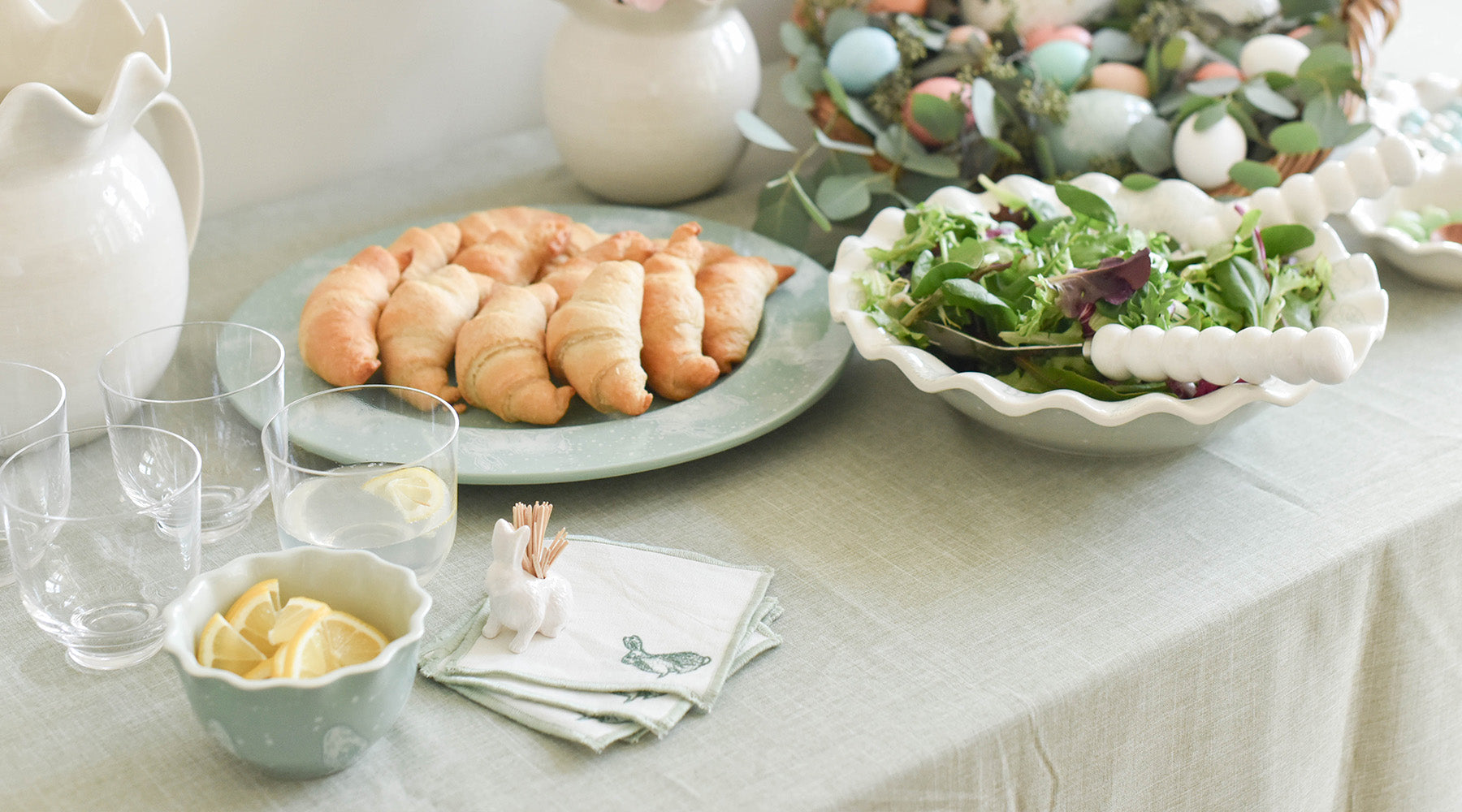
Family-style – Dishes are placed in the center for guests to serve themselves. This style works well for hearty, communal meals like roasted meats, pasta, or large salads {like our Go-To Green Salad}. It encourages conversation and interaction, making your table setting feel warm and inviting.
Buffet – Food is arranged on a separate table for self-service. Perfect for a larger gathering or casual meals, a buffet allows for variety {think tacos, make-your-own pizza stations, or breakfast spreads} while freeing up space on your main tablescape for you to set a table that features more decorative elements.
Plated – Each guest receives a pre-portioned meal at the table. This approach is ideal for formal dinners or multi-course meals, such as steak and vegetables, or a plated brunch. It allows your table settings and centerpiece to remain uncluttered and visually striking.
How to Choose Serving Dishes Based on Your Serving Style
The type of serveware you use should work in harmony with the menu and serving style you’ve chosen. The right designs not only make food presentation more beautiful but also ensure that everything fits comfortably on your tablescape and is easy for guests to enjoy. Here are some ways to match serving dishes to your chosen style:
Family-style – Large platters, wide bowls, and wooden serving boards work best. These styles make it easy to pass food around the table and encourage sharing.
Buffet – Tiered stands, chafing dishes, and clearly labeled serving trays help create a seamless flow, allowing guests to serve themselves with ease.
Plated – Smaller, complementary serving dishes {sauce boats or bread baskets} work well since most of the meal is pre-portioned onto plates.

3. Creating Beautiful Table Settings
Whether you’re creating a simple setup for a casual table or a multi-layered, formal tablescape, the way you set a table sets the tone for the meal and experience of each guest. From plates and utensils to glassware and napkins, each style is a key component to making the table feel intentional.
A thoughtfully arranged table setting is also a place to get creative. Mixing patterns, textures, and colors, or adding personal touches like napkin rings or name cards, allows your personality to shine while enhancing the overall look and feel of your tablescape.
Layers of a Table Setting
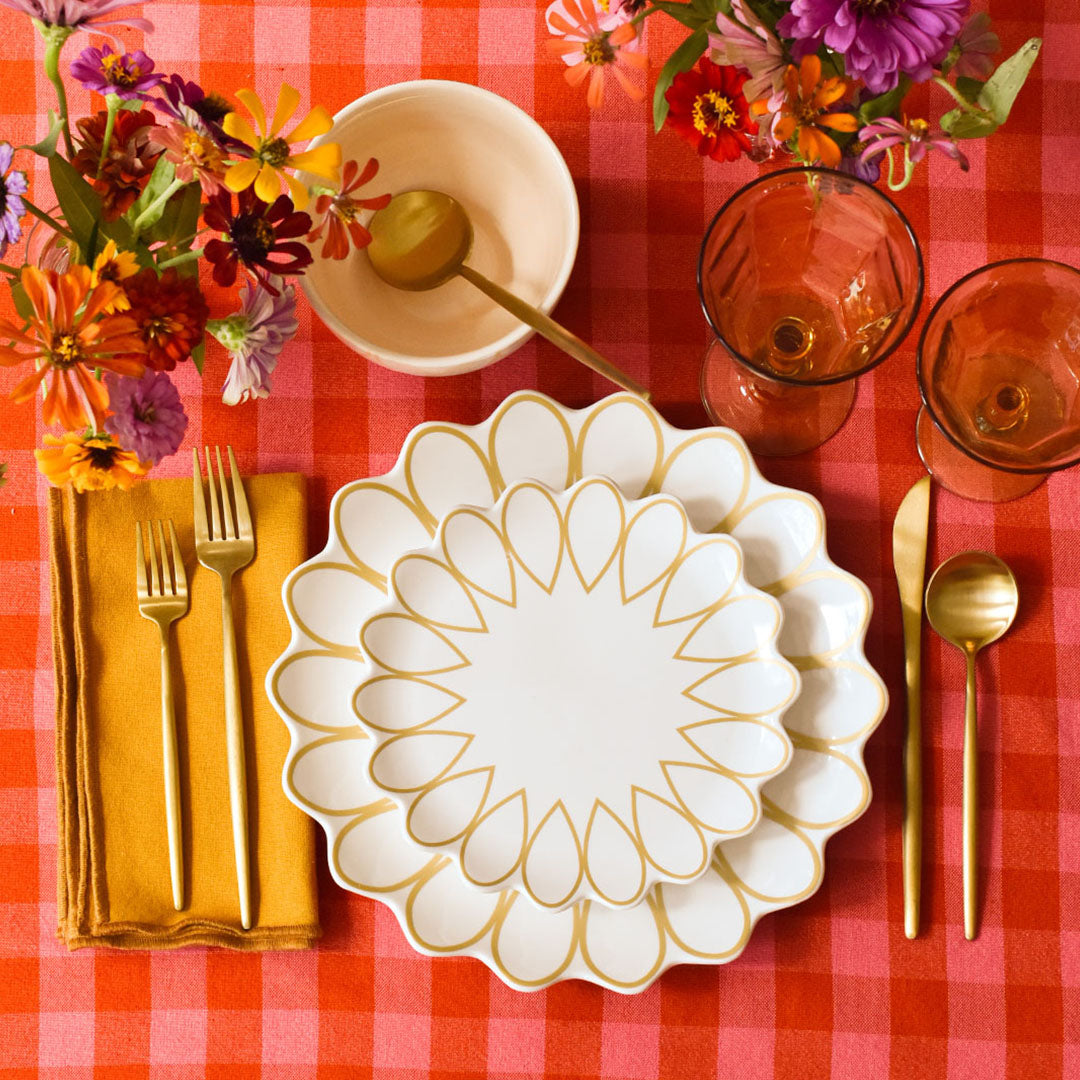
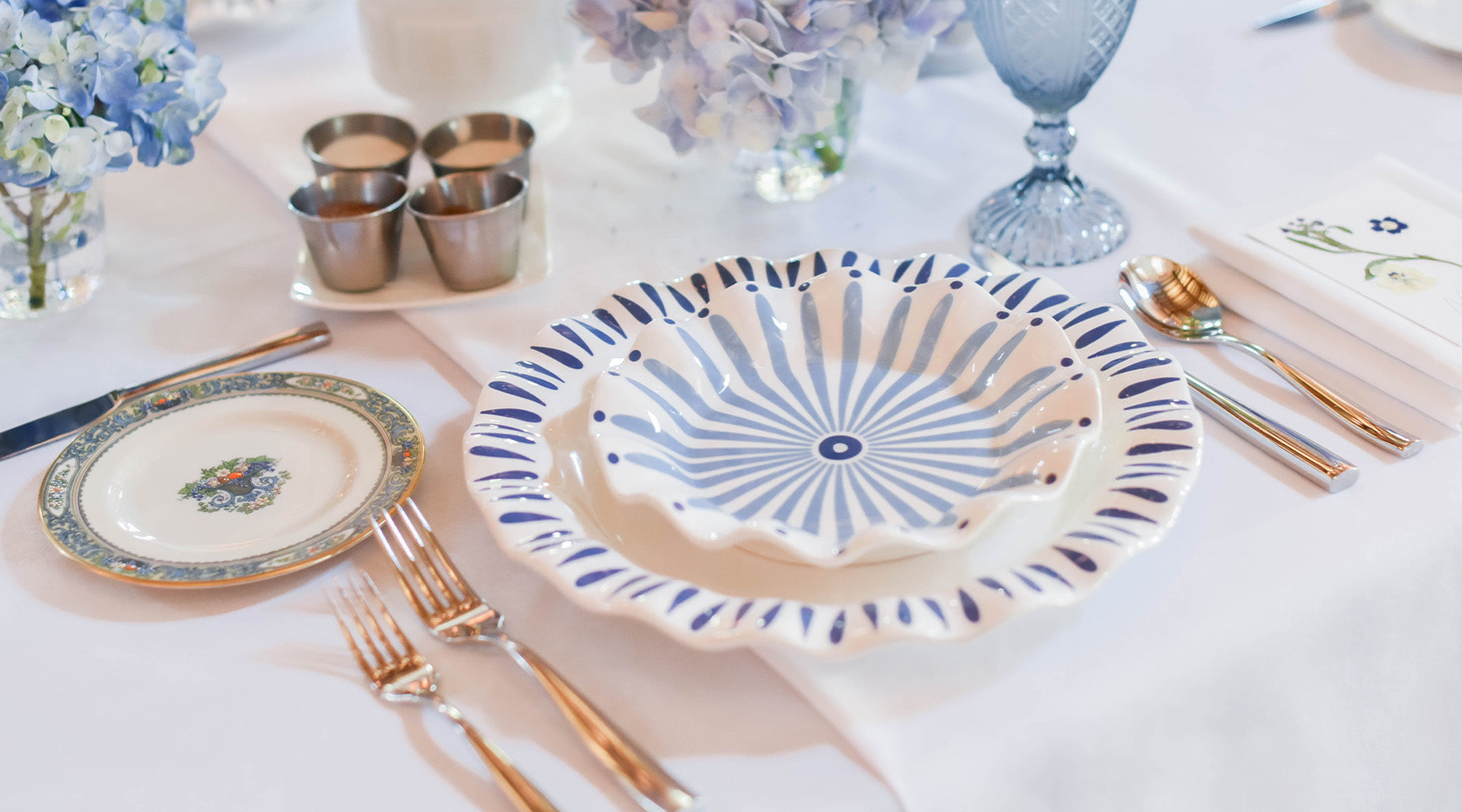
When you set a table, layering each element with intention creates a polished look. Starting from the foundation and building upwards allows you to design a tablescape that’s cohesive while leaving room for creativity. You’ll want to curate your layers with:
Table Linens – Tablecloths, runners, or placemats create the base for your tablescape. Table linens also play a big role in defining the overall mood of your design.
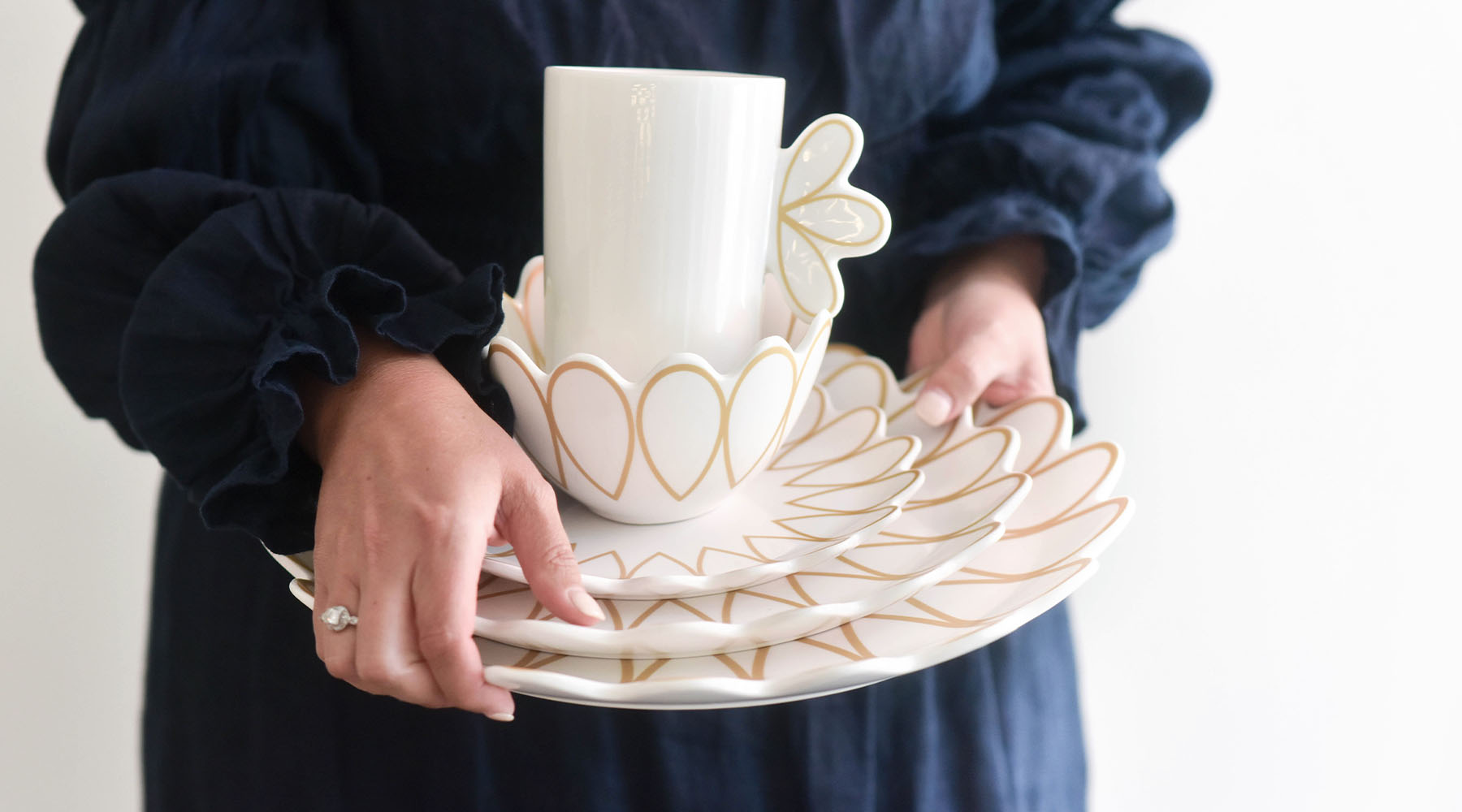
Dinnerware – Plates, bowls, and chargers are essential styles for any table setting.
Glassware – Water glasses, stemmed wine glasses, or even fun specialty glasses add height, sparkle, and personality when you set a table.
Flatware – Forks, knives, and spoons complete the table setting, adding balance and polish to the overall design.

4. Centerpiece Ideas for Tablescapes
Stunning centerpieces are often the focal point of a tablescape, drawing the eye and anchoring the entire design. Whether it’s a floral arrangement, a cluster of candles in striking candle holders, or a seasonal accent, the centerpiece adds personality and dimension to your table. The key is balance – choosing something that enhances your table settings without overwhelming them.
Balancing Height and Scale
When you set a table, the height and scale of your centerpiece can shape the overall feel of how guests experience the gathering. A tall, dramatic arrangement might look stunning, but if it blocks sightlines across the table, it can interrupt conversation.
The best rule of thumb is to keep your centerpiece either low enough for guests to see over or tall and narrow enough for them to see through. Mixing in varying heights {such as clusters of small vases, candles, or decorative accents} creates interest while keeping your tablescape functional.
The Role of Color in Table Design
Once your table setting and centerpiece are in place, color is what ties everything together. The hues you choose can completely transform the mood of your tablescape. Soft pastels and neutrals create a calm, relaxed atmosphere, while bold tones or jewel shades bring energy and drama to a table. Even small pops of color, such as a patterned plate or a bright napkin, can make your design feel more dynamic.
When you set a table, think about how your color palette complements the occasion and the season. A monochromatic scheme feels sophisticated and timeless. On the other hand, layered tones and contrasting colors add personality and depth. Color doesn’t just decorate your table; it tells a story about the experience you are creating for your guests.
Mixing and Matching with Confidence
Don’t be afraid to get creative when you set a table – some of the most memorable tablescapes come from mixing what you already own. Blend patterns, colors, and textures in unexpected ways to create a look that feels collected rather than coordinated.
Pair vintage dishes with modern glassware, mix bold prints with simple solids, or layer different finishes for added depth. When done intentionally, these combinations can create a sense of ease that makes your table settings feel both lived-in and thoughtfully designed.

5. The Finishing Touches
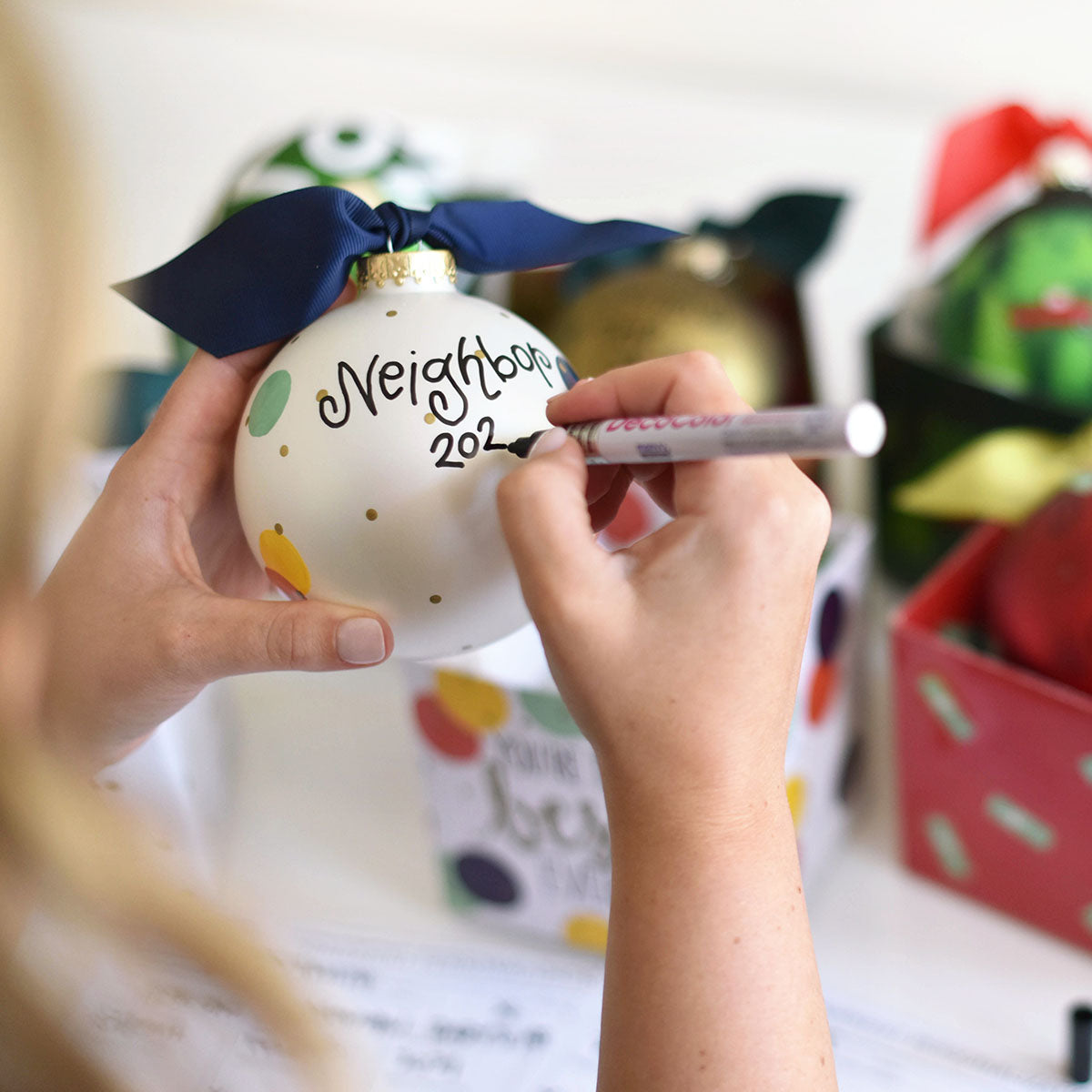
The final touches bring your tablescape to life and make it feel uniquely yours. Set a table with folded napkins tied with ribbon, handwritten place cards, or a sprig of herb resting on each plate. These simple details may feel insignificant, but they are what make your guests feel truly welcome.
Lighting and ambiance also play a big role in completing your tablescape. Soft candlelight, twinkle lights, or even a few tea lights can set the tone for the gathering and make your table glow. Add some background music or a subtle scent from fresh flowers or seasonal greenery, and your space becomes more than just a place to dine – it becomes an experience your guests will cherish and remember.
Incorporating Seasonal or Themed Elements
Once you’ve mastered the basics of how to set a table, it’s time to have fun with it. The beauty of a well-designed tablescape is that it can change and evolve with each season or occasion. By simply swapping out colors, textures, and accent designs, you can give your table a fresh look without starting from scratch.
Think soft pastels and florals for spring brunches, vibrant citrus tones and woven textures for summer, or pumpkins and rich hues for autumn gatherings. During the holidays, lean into metallic accents, greenery, or sentimental décor that brings warmth and nostalgia to your table settings.
Embrace the Joy of Gathering
At the heart of every beautifully set table is the joy of bringing people together. Designing a tablescape shouldn’t feel like a chore, but instead an opportunity to express your creativity, share your style, and make meaningful memories with people you love. Let go of perfection and focus on the feeling you want to create.
Whether your napkins aren’t perfectly folded or your centerpiece came together at the last minute, what guests remember most is how they felt at your gathering. When you approach hosting with a sense of ease and gratitude, every gathering {no matter how simple} becomes something truly special.
Designing a tablescape is about so much more than arranging plates and flowers –it's about creating a space that encourages connection and celebrates everyday moments. When you set a table with care and creativity, you invite guests to slow down, savor the meal, and enjoy each other’s company.
There’s no single “right way” to set a table you love. The most memorable gatherings come from blending intention with personality, using what you enjoy, and layering in little details that feel true to you. Each thoughtfully styled tablescape becomes a reflection of your warmth as a host and a reminder that the best memories are often made around a table.